
Mustard Greens
Mustard greens are the leaves of a plant belonging to the cabbage family. Originally grown in Asia, the mustard plant has spread across the world. The leaves are green with red or purple veins and have a flavor ranging from peppery in the small leaves to spicy and pungent in the larger leaves. Mustard greens are in season early spring until the weather warms in Summer. Small leaves are tasty in a mixed greens salad. Large leaves should be removed from the tough stem and steamed, sautéed, or simmered.
Storage
Store mustard greens in a sealed plastic bag in the fridge for up to a week. Wash them just before using.
Flavor Pairings
bacon, ham, garlic, onion, ginger, peppers, soy, sesame oil, lemon, vinegar.
Mustard Seeds
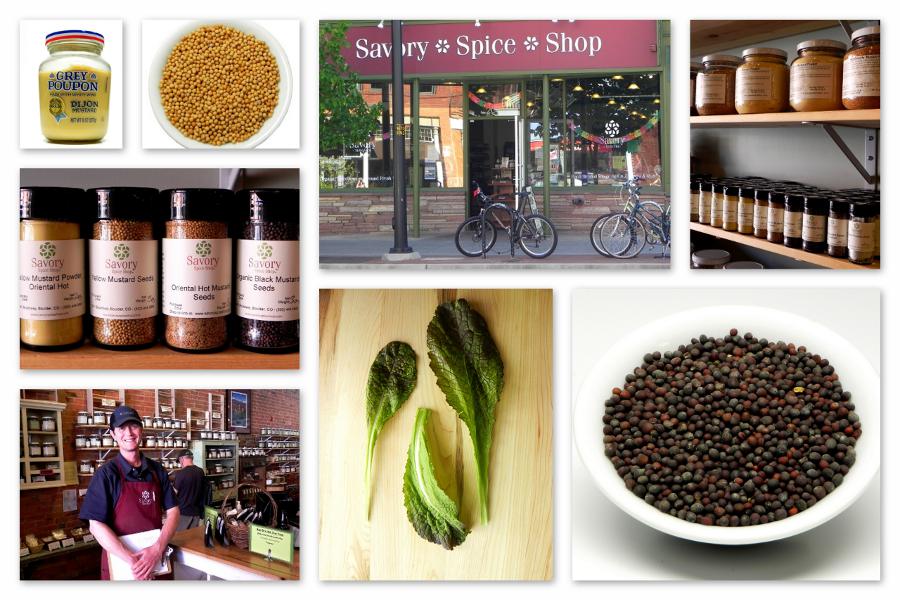
Mustard seeds are harvested from seed pods on the same plant as mustard greens. According to the reference, Herbs & Spices, the pungent taste of mustard seed is a result of the enzyme, myrosinase, which is activated by water. There are 3 types of mustard seeds: white, brown, and black. White mustard seeds (aka yellow) are the least pungent and are used to make American style mustard. Black mustard seeds can be difficult to find and replaced by brown mustard seeds which are easier to harvest commercially. Brown mustard is native to India where it’s used in mustard oil and curry dishes.
Whole mustard seeds are also used in marinades and pickles. They can be ground into mustard powder for barbecue rubs and sauces. Mustard seeds are ground and combined with water, vinegar, and sugar to make prepared mustard. The flavor of mustard is spicy but ends clean and doesn’t linger on the palate. According to Darina Allen, mustard should be added at the end of cooking because its flavor dissipates quickly when exposed to heat.
Storage
Mustard seeds can be stored for a year. Powdered mustard will keep for 6 months in a cool, dark pantry. Prepared mustard spread should be refrigerated after opening.
Flavor Pairings
green beans, beets, asparagus, leeks, carrots, cheese souffles, ham, lamb, rabbit, tuna, curries, sausage, chili, dill, honey, tarragon, tumeric, casis.
Support Your Local Spice Shop
Everyone always says to source your spices from a shop with high product turnover. I say it’s more important to support retailers who have a passion for their product and a knowledgeable staff. Here in Boulder, my local source for spices is the Savory Spice Shop on the corner of Broadway and Pearl Street. Dan Hayward, the owner, can almost always be found behind the counter. Dan is eager to share his extensive knowledge of spices but also listens so that he can help you find exactly what you need. His staff are well trained and friendly. This week as I’ve researched mustard, Dan has been a valuable resource. He agreed to answer a few questions about mustard for you guys, isn’t that nice? Thanks, Dan!
Do you have any interesting facts we should know about mustard?
Dan: Yellow mustard powder is the ground product of the seeds from a large bush native to Asia. There are various levels of heat, so it’s best to try a combination of Mild, Regular, or Oriental Hot to achieve your own unique blend. Used in small doses for sauces, marinades, dressings, and rubs makes a delicious addition to your culinary creations.
What role does mustard play in spice blends? Why use it?
Dan: We use mustard powders in many of our blends to achieve many purposes i.e. flavor balance, flavor intensity, and/or to accentuate various flavor profiles. Most often, we use mustard powders in our BBQ rubs.
What is your favorite way to use mustard?
Dan: I enjoy making my own mustard at home with our mustard powders (no more store bought for me!). Try adding herbs for a twist like tarragon, chervil, or basil. And, often I will add some powder to a salad dressing for that extra zing…
What is your favorite way to use mustard? Let me know in the comments section or Click Here
Love the pictures today! Great shots!
Thanks!