
What is Couscous?
In the U.S. it is easy to mistake couscous as a grain because of the way it’s packaged and sold and because we are so unaware of how couscous is produced. It’s a whole different story in Africa and the Middle East, where making couscous by hand is part of their culture. To quote The Soul of a New Cuisine, by Marcus Sameulsson:
“When it comes to North African cooking, no other food compares in importance to couscous. Called seksu in Berber, this pasta is still formed by hand into tiny balls, then steamed in a perforated pot known as a couscoussier.”
According to the book, Ancient Grains for Modern Meals, couscous is neither a grain nor a pasta. Maria Speck refers to couscous as semolina flour pellets, which doesn’t sound appetizing at all. Poor couscous, you are more than a “flour pellet.” Historically in the Middle East making couscous is a time consuming and laborious process that involves rolling semolina flour into tiny balls by hand, steaming the balls and then drying them. In Africa couscous is made from a variety of grains such as barley, millet, or wheat bran.
The character of cooked couscous is light and fluffy. It readily absorbs vinaigrette for salads or the savory juices of roast meats. Middle Eastern cooking makes use of a couscoussière– a special pot with a steamer on top. Meats, vegetables, and chickpeas are braised in the bottom part of the pot. The steam rises through holes in the top of the pot and cooks the couscous. You can make your own couscoussière by setting a colander lined with cheesecloth atop a large pot. The entire meal made in a couscoussière is known as couscous-meat and veg included.
The History of Couscous
Claudia Roden, author of The New Book of Middle Eastern Food, has spent a lifetime documenting the history and recipes of Middle Eastern cooking. Her book explains that couscous is the national dish of Maghreb; the North African countries of Morocco, Tunisia, Algeria, and Libya. Couscous is hundreds of years old, appearing in writings from the thirteenth century. There are different accounts as to where couscous originated. In The New Book of Middle Eastern Food, Claudia Roden writes that “couscous is associated with the indigenous Berbers, who call it keskou.” She goes on to say that the Berbers are responsible for developing the technique of rolling the wheat and steaming it over a stew. Interesting fact from the book: in Egypt and Lebanon couscous is called maghrebia. Claudia attributes this name change to the fact that the word couscous in Arabic is a bad word for something else entirely. I won’t go into it, you’ll have to read her book.
Copeland Marks, writer of The Great Book of Couscous, disputes the idea that the Berber people came up with the technique for rolling semolina and cooking couscous on their own. He sites the Italians and their knowledge of grains and pasta. First influence being the Roman Empire and later immigrants from Sicily. The truth is that Maghreb is a nation with a long history of invaders and nomadic people. In her book, Couscous and Other Good Food From Morocco, Paula Wolfert shared her theory that a history of conquering and being conquered by foreign powers is important in the development of great cuisine. We’ll never know exactly how couscous came to be, but we can be sure it was the result of the mixing of different peoples in the Middle East.
Buying Couscous
Couscous is a dried, pre-cooked pasta like product sold in bulk at many grocery stores. Williams-Sonoma sells “hand rolled” couscous made by a women’s co-op in Palestine. My local Whole Foods carries three varieties:
Couscous
Coarsely ground pre-cooked semolina. It cooks quickly- just pour boiling water over, cover, and allow the couscous to sit about 5- 10 minutes until the liquid absorbs. Fluff with a fork and serve.**
Whole Wheat Couscous
Still has the chewy bran layer of the semolina which contributes a nutty flavor and makes for a whole grain pasta. The whole wheat couscous is more nutritious while tasting almost the same as regular couscous, so I use it most of the time.
Israeli Couscous
Similar to regular couscous in make-up but the shape is larger, like a pearl. For the most part it is cooked in broth rather than steamed. Israeli couscous has a soft, creamy texture. It can be used in soups, stews, and salads just as regular couscous.
Cooking Couscous
It’s difficult to find anything other than instant, quick-cooking couscous in the United States. As written above all that is needed to cook this type of couscous is to cover it with boiling water and a lid, then allow it to sit 5-10 minutes until the water is absorbed. However, the authors of Artichoke to Za’atar, Greg and Lucy Malouf, suggests that steaming couscous the traditional way yields more flavor and better texture, as well as making the couscous easier to digest. The capacity of couscous to absorb liquid is great, and undercooked couscous can swell in your stomach causing indigestion. Artichoke to Za’atar is a wonderful Middle Eastern inspired cookbook organized by ingredients in an approachable and modern style. In it you’ll find a recipe for traditional buttered couscous.
Couscous can be cooked on its own and served for breakfast, flavored with cinnamon, milk, dried fruits and honey. It functions as a side dish to accompany spiced tagines, braises, and stews. You can also add couscous to soups instead of the usual pasta or rice. Once cooked and cooled couscous can be used as part of a summer salad with herbs, veg, and vinaigrette. There are as many versions of couscous as there are homes in the Middle East. According to Artichoke to Za’atar Tunisians are known for their fiery chilis and use of seafood. Moroccan couscous makes use of sweeter, more aromatic ingredients like dried fruits, nuts, and honey. Algerian couscous has a reputation for being “robust and spicy.”
Flavor Pairing
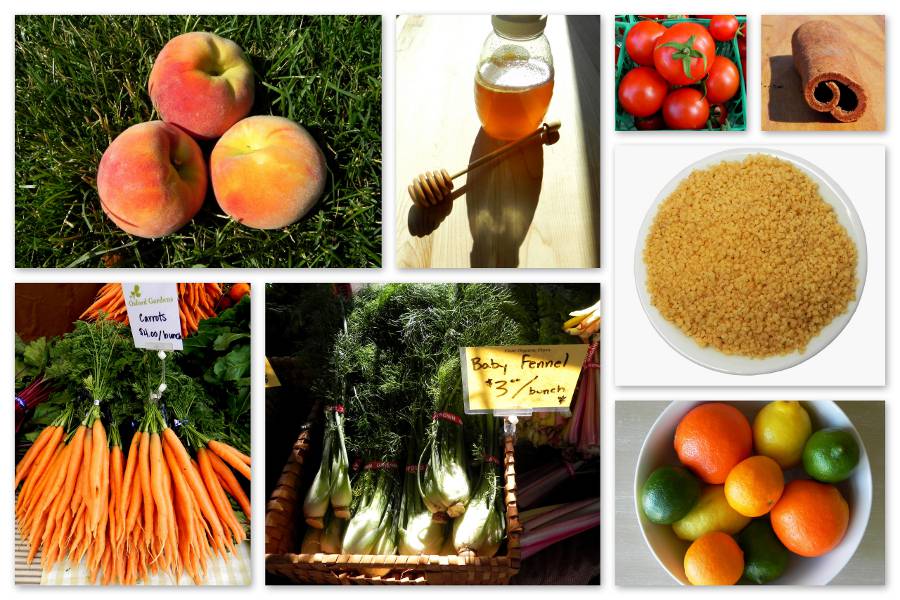
Ingredients you’ll find in many couscous dishes:
- Spices- cinnamon, cardamom, ginger, sweet paprika, cumin, allspice, saffron, tumeric
- Fresh herbs- thyme, mint, parsley, basil, cilantro
- Nuts- almonds
- Aromatics- rose water, orange blossom water
- Harissa
- Honey
- Chickpeas
- Dried fruits and fresh fruits like mangoes, apricots, peaches, cherries
- Citrus for aromatic qualities or as a dressing for couscous salad- lemon, lime, orange
- Seafood- Crab, whitefish, shrimp
- Onions, shallots, garlic
- Tomato, chili, bell pepper, eggplant, squash, zucchini, fennel, cabbage
- Root vegetables- carrot, turnip, potato
- Meats: lamb, chicken, beef