
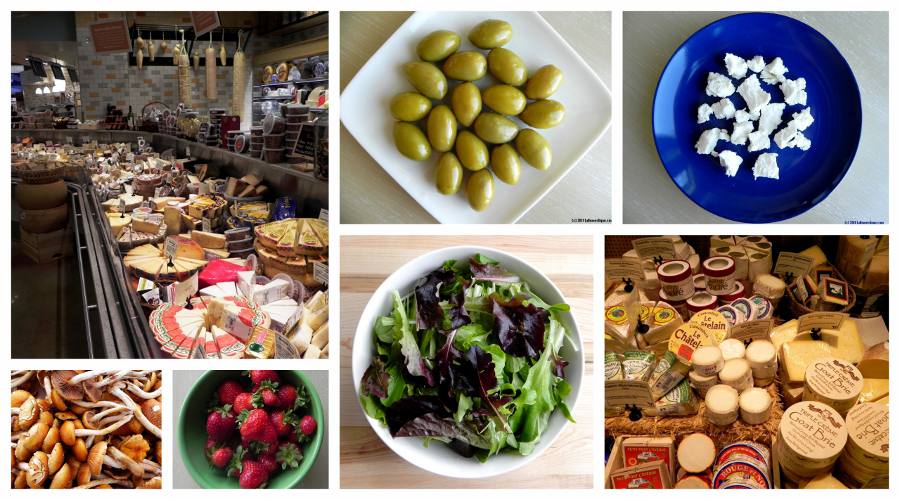
 Special thanks to Alfalfa’s Market for allowing La Domestique to shoot photos of their cheese department.
The Soul of Colorado Goat Cheese
According to The Cheese Lover’s Companion, “The soul of every cheese is the milk used to make it”. Think about that for a second. What a great analogy, the idea of cheese having a soul! It all starts with milk, and the manipulation of the cheese maker (salting, molding, ripening, etc.) is just packaging. What affects the flavor of the milk to start with? Certainly the species and breed of animal produce milk with unique flavors. The milk produced by goats is lower in fat and supposedly easier to digest that other milks. The texture can be soft and creamy or semi-hard like Haystack Mountain Sunlight. Goat’s milk yields cheeses with acidity, resulting in a tangy flavor.
Then comes terroir and season. Terroir is a sense of place. It’s a reflection of where the animal lives and what native plants it eats, the air it breathes and the weather it endures. What kind of terroir do we have in Colorado? It’s a rugged and mountainous landscape with crisp, cool air and 300 days of sunshine a year. Peaches, plums, cherries, and apples grow in our orchards. Chives and thyme grow wild and lemony sorrel flourishes in our dry climate. At Avalanche Cheese Company, Wendy Mitchell’s goats graze on clover, alfalfa, oats, and peas in the fields (according to Edible Aspen).
The flavor of cheese can vary through the seasons. During spring grazing animals might nibble on wild herbs that affect the flavor of their milk. Colorado chèvre can be lemony, grassy, earthy or mineral. The cheese maker can decide to add flavorings. Haystack Mountain Goat Dairy makes several different flavors of chèvre: cracked pepper, applewood smoked, and Herbes de Provence. You’ll also find pungent washed rind, blue, cheddar, soft ripened and robust raw milk goat cheeses in Colorado.
Goat Cheese & the Spring Pantry
Here are a few ideas for pairing goat cheese with ingredients in your spring pantry:
- olives, artichokes, charcuterie
- herbed goat cheese and radishes
- arugula, balsamic vinegar, olive oil, strawberries, walnuts
- yellow beets, mixed spring greens, hazelnuts
- dill, chive, scrambled eggs
- pasta, mint, asparagus, peas
- soft, bloomy-rind goat cheese with honey
- sautéed mushrooms, garlic, shallot, spring herbs
Storing & Serving Cheese
Firm, semi-firm, and semi-soft cheese will keep several weeks wrapped in plastic and stored in the warmest part of the refrigerator. If mold appears on these cheeses it can be cut off and discarded. The rest of the cheese is safe to eat. Wrap fresh and soft-ripened cheese tightly and keep it in the coldest part of the refrigerator for about two weeks. Mold on fresh and soft-ripened cheeses is a sign that it’s time to throw the cheese out.
Cheese should always be served at room temperature so you can fully enjoy it’s flavor, aroma, and texture.
The cheese plate is a fun way to start or end a meal. If you are serving a cheese plate composed of only one milk type, like Colorado goat cheese, make sure to use a variety of textures and flavors to make it interesting. The acidity of goat cheese is balanced by sweet flavors such as honey and fruit. Nuts such as hazelnuts or walnuts are especially good with goat cheese.
The rind: to eat or not to eat? It depends. Man-made or wax rinds are inedible. Soft, bloomy-rind cheeses like that of Avalanche Cheese Company’s Lamborn Bloomers is edible and delicious. However, the pungency of washed- rind cheeses can be overwhelming or unpleasantly strong. Your nose is a good tool. If it smells bitter or pungent, it will taste that way. A sweet and earthy aroma is sure to be a treat- go for it!
Buying Cheese
You can find cheese in a cheese shop, farmer’s market, supermarket, or the producer’s own store front. Look for a good selection with cheeses from local producers and a shop that seems well-loved by the retailer. Is the staff passionate and knowledgeable about their product? The display should be neat and organized. Ask questions and allow the person behind the counter to share their expertise. I like to ask, “what cheese are you excited about right now?” It’s a great way to discover something new.
It’s customary for the retailer to offer tastes of the cheeses, so don’t hesitate in asking to try a cheese you’ve got your eye on. If you don’t see the cheese you’re looking for, ask the retailer if they can get it for you. Consumers have the power to make the marketplace more eclectic by communicating with retailers.
Where to shop in the Boulder/Denver area? My absolute favorite shop is The Truffle Cheese Shop in Denver. It’s a warm and inviting store that carries a good selection of cheeses, charcuterie, and specialty foods without being overcrowded and difficult to shop. Every time I go in I’m struck by the generosity and friendliness of the staff. I have spent an entire afternoon tasting cheese with the owner who obviously loves what he does and creates an environment where there is no pressure. This place seriously gives me the warm fuzzies.
Local producers like Haystack Mountain Goat Dairy can be found at the Boulder Farmer’s Market offering tastes of their cheeses each week. Friendly and hardworking, these people chose the noble craft of cheese making for their livelihood. Make sure and let them know how much you appreciate their product, they put their heart and soul into it. Haystack Mountain Goat Dairy also sells cheese at their creamery in Longmont, Colorado. You can buy some cheese and look in the window as they make the cheese. Don’t look for any four legged friends though, Haystack no longer raisers their own goats.
I’m also excited about the new Alfalfa’s Market in Boulder. As you can see from the pictures, Alfalfa’s put a lot of effort into their cheese and charcuterie department. It’s huge in comparison to any other local retailer, easy to navigate and a joy to shop. They carry a wide range of local and international cheeses. Having just opened in April, the new staff is learning the ropes while still demonstrating a passion for the product and friendly service. Alfalfa’s is committed to being a real part of the Boulder community, and it’s evident in their say “yes” approach to customer service and their down to earth friendliness. I look forward to watching them settle in at the corner of Broadway and Arapahoe street.
Have you tried Colorado goat cheese? Where do you like to shop for cheese?
Leave Your Suggestions In The Comments Section (Button At The Top Of This Article)