
Where Do Cherries Come From?
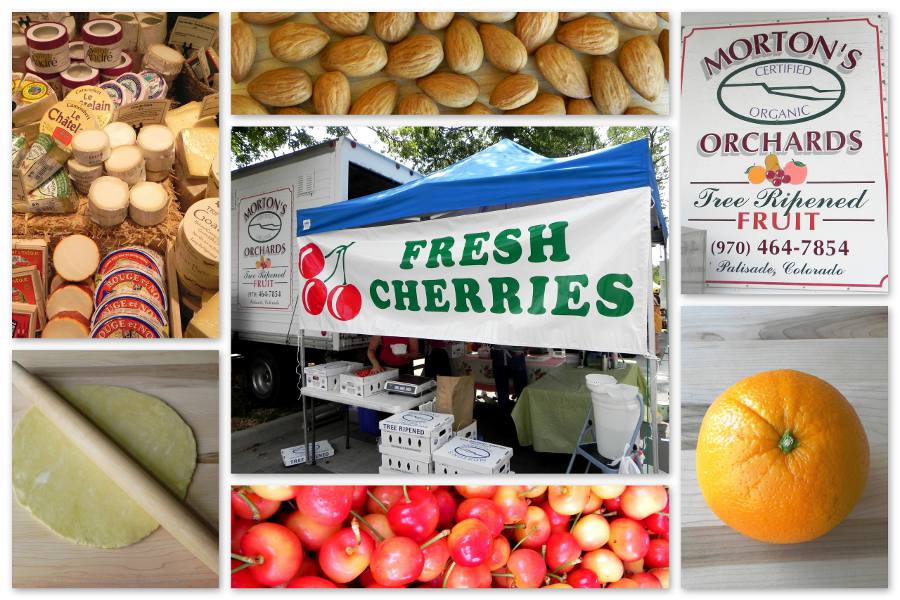
Cherries are a stone fruit that grows on a tree. The varieties are known as either sweet or sour. Sweet cherries are delicious eaten straight from the tree, while sour cherries are very tart and need to be cooked. The cultivation of cherries is a complex and fascinating process. According to Rodale’s Illustrated Encyclopedia of Organic Gardening, “Cherries are particularly complex. Apart from the self-fertile cultivars (mainly sour varieties) they all need pollinators and are extremely fussy, in general, as to who supplies the pollen.” This means a lot of thought goes into planting cherry orchards with compatible varieties that will pollinate each other. Incompatible varieties will result in no fruit. Sour cherries will pollinate sweet. At my local Boulder Farmers Market, I learned that Morton’s Orchard plants 1 Ranier cherry tree for every 9 Bing trees simply so the Ranier will pollinate the Bing. Therefore, they have a lot more Bings to sell at the market than they do Ranier. You may notice a similar situation at your local market, and now you know why.
Sweet cherries are hardy from zones 5 to 9. They flower early in the spring and a frost will damage the blossom. Sour cherries flower just a little later. I live in Colorado, where we can have late frosts in May and even the unexpected snow storm. Some years there will be no cherry crop at all because of our short growing season. This makes me appreciate cherries all the more, as I feel very lucky when I’m able to find local cherries at the farmers market.
Understanding how cherries are grown is important in appreciating the farmers who bring this fruit to our table. Cherries are both fussy in their pollination needs and delicate in their susceptibility to frost damage. The time and labor of growing cherries is a huge investment, and some years it is all for nothing because of cold weather late in spring. To quote Alice Waters, “Food is precious.” Think about this when you buy fruit from your local farmer. Feel good that you are supporting the livelihood of someone who cares about the quality, flavor, and safety of your food.
Cherry Varieties
Sweet
In Colorado, sweet cherries are available from mid-June to mid-July. At my local market I find Bing (large and very dark red/black skins) and Ranier (yellowish skin that blushes pink when ripe) cherries. Other sweet varieties include Lapins, Napoleon (Royal Ann), Stella, Florence, Brooks, and Black Tartarian. The golden pink Royal Ann cherry is famously used for Maraschino cherries.
Sour
Sour cherries ripen later than sweet. Varieties include Early Richmond, Meteor, and Montmorency with their light colored flesh with colorless juice. The Northstar variety has dark red flesh and red juice.
Buying & Storing
Always purchase cherries stem on, as they will keep longer. Choose cherries that are firm and unblemished. Soft spots indicate bruising. The Produce Bible warns that cherries must be kept at a cool temperature as heat accelerates their degradation. Store cherries in a plastic bag in the fridge. Ripe sweet cherries dark red fleshed varieties will last a good week in the fridge. The more delicate pale fleshed cherries will last about 3 days in the fridge. Sour cherries will be good for a couple weeks. Cherries can be frozen without any problem.
The Pit is Magic
Old world recipes often call for the pit to be left in the fruit. Cherry pits have a complex and interesting bitter almond flavor that is not so present in other stone fruits. The Produce Bible gives a great suggestion for if you want the flavor of the pit but don’t want anyone to break a tooth on your dessert: crack a few of the pits and tie them in cheesecloth, then toss the sack into your cooking liquid for jam, compotes, or puddings.
Ingredients that pair well with cherries
- almonds or almond extract (almonds are known to make cherries taste more like cherries)
- cheese: goat cheese, blue cheese, parmesan, creamy Robiola
- cured meats, especially hard salami with spices or fennel seasonings
- greens such as arugula or spinach salads
- vanilla
- kirsch
- buttery pastry
- pork, duck or turkey
- brandy, fortified wines like port
- spices like cinnamon, cloves, allspice, cardamom
- vinegar such as balsamic for sauces or white wine vinegar for pickling cherries
- herbs like tarragon, basil, thyme, rosemary
- dark chocolate
- oranges