
The earthy, nutty flavor and hearty texture of barley lends a comforting character to soups and stews. Is it the history of this ancient grain packed into a little brown kernel that makes us feel nourished? For thousands of years our ancestors have cultivated barley. It’s high in fiber and has a low glycemic index. A meal that includes barley is sure to be a satisfying one.
Growing
According to the book, Ancient Grains for Modern Meals, barley is a highly adaptable grain that grows well in climates and soils across the globe. Though intensive farming corporations grow genetically engineered grains, heirloom varieties of barley can be found growing in the U.S. Diversity is important to the health of nature, so look for different types of barley like black, bronze, and gold versions.
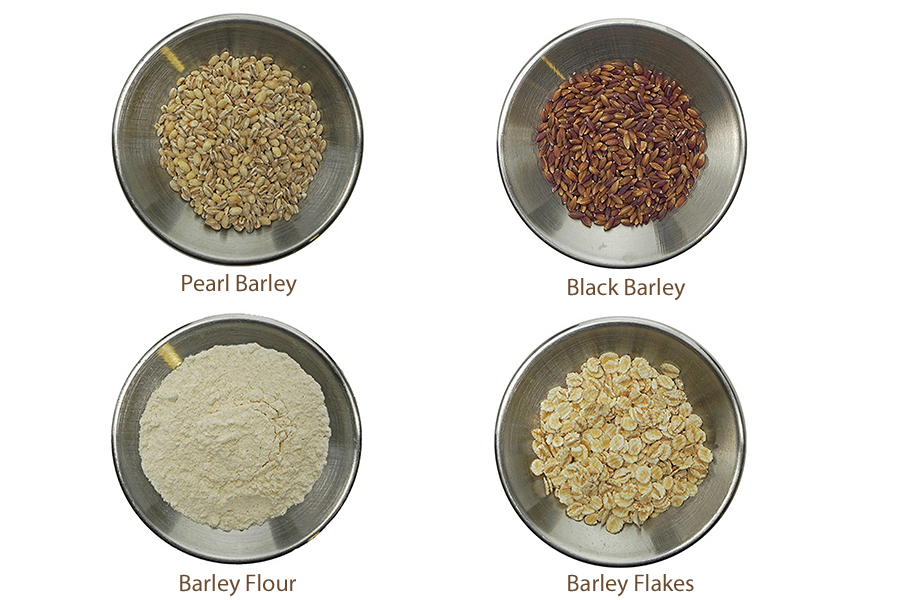
The various forms of barley
-
Barley Flour
Barley flour adds a nutty, sweet and slightly malty flavor to baked goods. It also makes baked goods more moist. However, it’s low in gluten, and must be combined with higher-gluten flours. In the cookbook, Ancient Grains for Modern Meals, Maria Speck advises that if you are substituting barley flour into a recipe, replace no more than a third of the flour with barley flour so the bread will maintain it’s structure when baked. Purchase barley flour or grind your own. The Splendid Grain is a great resource for directions on making your own barley flour.
-
Pearl Barley
Processed by removing some of the germ and bran. Though pearl barley is not a whole grain, it still retains much of it’s fiber and nutrients. I like to use pearl barley because it does not require soaking and cooks much quicker (30 minutes) than whole grain barley.
-
Whole Barley
Has a darker color and more chewy texture than pearled barley because it has not been processed. This whole grain is higher in fiber than any other. It requires overnight soaking and takes about 50 minutes to cook.
-
Hull-less Barley
Reading The Splendid Grain, I learned that hull-less barley is an heirloom variety that’s easy to harvest by hand (the hull in whole barley is prickly). Hull-less barley is similar to pearl barley in texture and cooking time. Since this barley does not have a hull, the bran is not removed by processing and it maintains its nutritional value. In the U.S., Montana is a big producer of hull-less barley.
-
Barley Flakes
Similar to rolled oats in appearance and texture. Cook with barley flakes in the same way as oats- “oatmeal”, muesli, and granola.
-
Barley Grits
These tiny pieces of barley, good for breakfast cereal or as a substitute for polenta. Barley grits cook quickly, but it’s important to know that they have a thick, sticky texture.
Cooking
I like to cook with barley in autumn because of the heft it adds to soups and stews. Barley readily soaks up stock and flavor, making it a fitting substitute for arborio rice in risotto. A little roasted nut oil, such as hazelnut or walnut, with shavings of Parmesan is a luxurious finish to the risotto. Use barley flavored with herbs and cheese as a stuffing for fall squash, pumpkins, peppers, and mushrooms. The firm texture of barley is good in autumn salads served warm or cold. Toss the grain with greens, roasted root vegetables, apples or pears, and a vinaigrette for a packed lunch that will keep you going until supper. Barley flour is great for adding rich, nutty flavor to baked goods. Look for recipes that use barley flour in pancakes, cookies, cakes, and breads. The British like to use barley in sweet puddings composed of cream, currants, and a hint of whiskey. Speaking of alcohol, barley is germinated into malt and used to flavor whiskey and beer.
Flavor Pairing
– Fall vegetables: squash(butternut, acorn), bell peppers, carrots, turnip, fennel, onions, shallots, garlic
– Spices: sesame seed, freshly ground black paper, cinnamon, cardamom, clove
– Nuts and nut oils: hazelnut, walnut, almond, pistachio
– Cheese: Parmesan, soft goat cheese, feta, mozzarella, ricotta salata
– Greens: arugula, spinach, watercress, kale, Swiss chard
– Dried fruits: currants, raisins, prunes, apricots, cherries
– Herbs: rosemary, sage, parsley, dill, thyme, mint
– Citrus: lemon and orange
– Fall fruits: grapes, apples, pears
– Mushrooms (dried or fresh), truffles
– Beef, beef stock
– Roast chicken, stock
– Pork: prosciutto, bacon, ham
– Sour cream, crème fraîche
– Honey
– Coconut milk
Do you have a favorite barley recipe or flavor pairing? Let me know in the comments section. Click here.
I’ve used both pearl barley and barley flour with excellent results, but I’d never even heard of barley flakes, hull-less barley, or barley grits.
Also, I’d never thought to do a sweet dish with barley–I’m going to have to try it!
Lauren, I know how you love British foods- you could do an autumn cranachan with barley flakes for dessert.
I love pearl barley with chickpeas, lemon, garlic, parsley and some threads of chicken. I love it, but the spouse wrinkles his nose. So everytime he goes away, it’s what I make.
That combo looks tasty to me. 🙂