
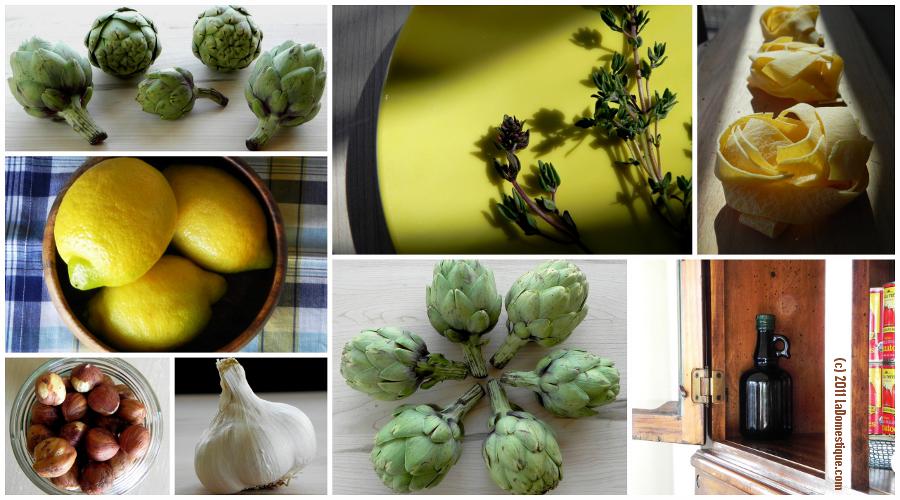
The Artichoke
According to Alice Waters in Chez Panisse Vegetables, artichokes were brought to America by Italian immigrants who settled in California in the early 1900’s. This prickly thistle has been cultivated by Sicilians for thousands of years. The Deluxe Food Lover’s Companion references the artichoke in ancient Greek and Roman literature. This plant prefers a sunny Mediterranean climate, and today it is mostly grown in Italy, France, and Spain as well as California. Available year- round, artichokes enjoy a place in the spotlight during their peak season of spring. They range in size from the small, tender “baby” artichoke to the large, big-hearted globe artichoke. There are many varieties and colors of artichokes as well. In Provence, the poivrade is a petit violet-colored artichoke prized for it’s complex, nutty flavor. Artichokes are both a wild plant and a cultivated crop, and after thousands of years, they are still mysterious- both ugly and beautiful. The thorns are painful to touch and prehistoric looking, but their brilliant colors and endless layers are captivating. Artichokes are full of contradiction: delicate and meaty, bitter and sweet, tangy and earthy. I think the artichoke’s complex nature is behind the difficulty in wine pairing. It’s like finding a match for your best girl friend: she’s uniquely beautiful, worldly, speaks several languages, loves theater and history as well as football. It’s gotta be the right guy.
Flavor Pairing
Due to their complex nature, artichokes seem to pair well with other earthy, seductive flavors. The heady aroma and pungent flavor of garlic combines beautifully with artichokes in a recipe for fried artichoke hearts with garlic aioli. Tangy, meaty black olives provide a foil for the nutty, sweet flavor of a braised artichoke. Salty anchovies combined with buttery artichoke leaves stimulate the appetite for more. Herbs that pair well with artichokes include earthy thyme and perky mint. On the other hand, the nutty, tangy artichoke is delicious with the richness of butter. Cheeses, such as Parmesan and goat cheese are also good accompaniments. “Roman Style” is a traditional way of serving artichokes with olive oil and white wine, as well as herbs. Nuts provide variety of crunchy texture against the soft, chewy artichoke. Hazelnuts and pine nuts are especially tasty with artichokes. During spring, artichokes happily join potatoes in a braised or roasted meat dish of spring lamb or veal. Alice Waters advocates pairing artichokes with white truffle. As you can see, friends of Mr. Artichoke are anything but boring.
Artichokes & Spring
Using artichokes in your spring pantry is a delight. Cut the bottoms off and boil or steam them, serving at the table with a vinaigrette or melted herb butter. Stuff globe artichokes with anchovies and breadcrumbs or garlic and olives, and roast in the oven. At cocktail hour serve canned artichoke hearts on the antipasto tray. Bruschetta with artichoke topping is a great hors d’ evours for a garden party. Shave artichokes paper thin and combine with spring greens and Parmesan in a salad. As the days get sunnier and warmer, fire up the grill and caramelize baby artichokes. Braise artichokes in stock or white wine and serve with pasta with other spring veg like fava beans or asparagus. Roast leg of lamb or veal over a bed of potatoes, spring onions, and artichokes. So many possibilities! I want to hear your favorite way of preparing artichokes. Let me know in the comments.
love all this about artichokes. they are one of my favs! Cant wait for them in be in the farmers markets 🙂 pretty blog
x
Nicole
{La Buena Vida}
Thanks Nicole! I was just taking a lovely tour of your site too. We’ve got french breakfast radishes in the farmer’s market right now and I can’t get enough of them.