
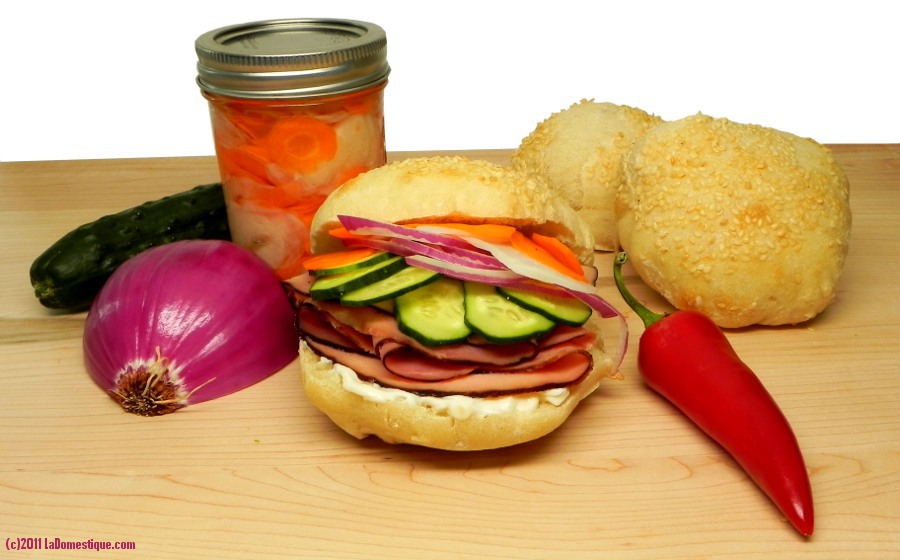
Do Chua with Bánh-Mì Sandwich
Let’s wrap up carrot week with a quick pickle and a flavorful sandwich that’s sure to shake up your packed lunch routine. As I searched for fun ways to use an abundance of carrots from my garden, I was inspired by a recipe for Do Chua found in the cookbook, Canning for a New Generation, by Liana Krissoff. She describes do chua as “probably the most common quick pickle on the Vietnamese table.” A quick pickle is one that’s not processed for long term preserving, and so the jar must be kept refrigerated and used up in a shorter time before it goes bad. Do Chua is carrot and Daikon radish pickled in salt, sugar, and distilled white vinegar. Liana Krissoff writes that the Vietnamese use do chua as a dipping sauce (a small bowl where a few of the vegetables float in the brine), eaten as a side dish, and it’s a traditional ingredient in the famous bánh-mì sandwich.
In her book, Couscous and Other Good Food From Morocco, Paula Wolfert writes “the history of the nation, including its domination by foreign powers” is necessary to develop great cuisine. The bánh-mì was born when French colonists brought baguettes and pâté to Vietnam and the Vietnamese people created a sandwich all their own. Chad Robertson includes a recipe for bánh-mì in his book, Tartine Bread. He writes that bánh-mì literally translates to “bread” and instructs that when you order a sandwich in a bahn-mi shop, you pick your filling and then finish with the words bánh-mì. An authentic sandwich is made on slices of thin, crispy baguette with pâté and thin slices of cold cuts. I learned from the Momofuku cookbook that a bánh-mì sandwich is typically slathered with mayonnaise and garnished with cilantro and sliced chili pepper to add heat. On her site, Viet World Kitchen, Andrea Nguyen calls for a drizzle of soy sauce in her Master Banh Mi Sandwich Recipe.
To me, a bánh-mì sandwich is rustic, satisfying, and intensely flavorful. The rich meats are balanced by sweetness and acidity of the do chua. Heat of sliced chili pepper plays off fresh, green cilantro and cucumber. Varied textures of the soft pâté, crunchy bread, and crispy pickled veg keep things interesting. I think of bánh-mì as a great way to use leftover roast meats and the last of a motley crew of vegetables hanging out in your crisper. Pack this sandwich for a satisfying lunch by keeping the ingredients in separate compartments and combining it all when you’re ready to eat. If you’ve never tried a bánh-mì sandwich, it’s time to try something new!
My Little Bánh-Mì
I’m on a bread roll kick right now, so I decided to make a totally not-traditional sesame coated bread roll for my sandwich today. The recipe came from Dough by Richard Bertinett, very similar to the rolls I made here.
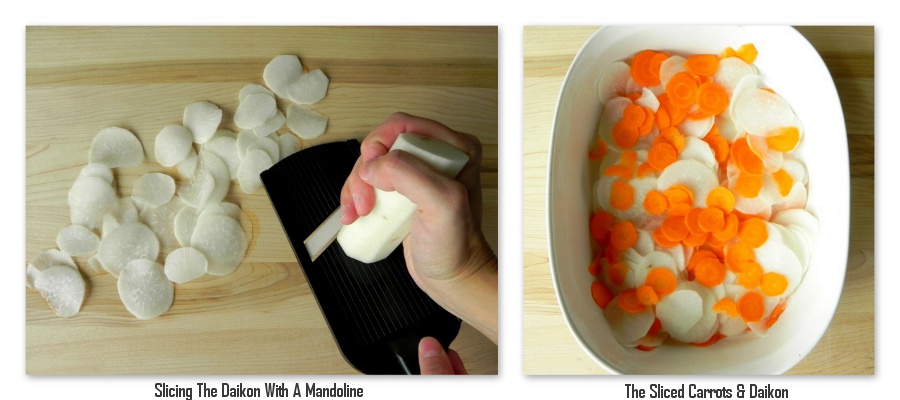
Next I made the Do Chua, pickled carrot and Daikon, from Canning for a New Generation. I peeled the vegetables and then sliced them into thin discs with my mandoline. I was feeling lazy so I didn’t do the traditional julienne strips, no biggie. I tossed the carrot and Daikon in salt and let them sit for half an hour, according to Liana Krissoff’s recipe. After this the vegetables release water, and I squeezed out as much liquid as possible from them. To finish simply stuff the sliced veg into a clean pint jar and pour over a liquid mixture of vinegar, water, and sugar. After curing two hours in the fridge the pickle is ready to use on your bánh-mì.
For my sandwich I layered mayonnaise, ham, sliced cucumber, fresh sliced chili pepper, cilantro, red onion, and the do chua on my homemade sesame bread roll. My little bánh-mì was a welcome change from the usual ham and cheese sandwich. I’m so happy to have discovered do chua and can’t wait to incorporate this pickled carrot and Daikon into more meals.
Thanks for reading and have a fantastic weekend!
I can’t even tell you how much I love banh mi! And three cheers for Willie Nelson.
Yay! Do you have a fav place or make it at home?
Beautiful photography this week!!!!
Thanks!