
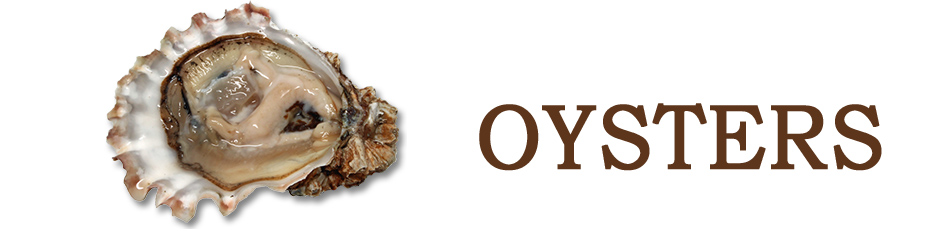
Happy New Year! This week at la Domestique we’re celebrating the New Year with oysters. I’m a huge fan of these sweet, briny shellfish. Bringing home a container of live oysters and serving them simply with a squeeze of lemon is such a pleasure. As I clean and shuck them, the aroma of coastal waters and sands invades my nostrils, transporting me to summers spent on the Gulf coast, beach combing. Maybe raw oysters just aren’t your thing? Don’t write them off completely. Oysters are delicious fried as part of a fritto misto or in a traditional southern po’ boy. Tomorrow is 10 Ways Tuesday here at la Domestique, and we’ll explore the interesting flavor oysters bring to Thai soups, the luxury of stuffed and baked oysters, and the simplicity of buttered oysters on toast. Keep an open mind, and maybe try something new in 2012?
Before we start cooking with oysters, let’s get to know them. January is peak oyster season, and it’s likely that your local fish market is overflowing with oysters from the Pacific, Atlantic, and Gulf coasts. I learned about the life cycle of an oyster while reading the book Sex, Death & Oysters by Robb Walsh. As the water in oyster habitats cools down in autumn, oysters begin storing a carbohydrate called glycogen. The bivalves plump up and their flavor becomes sweet and creamy. Warmer temperatures of spring entice oysters into the reproductive cycle. All energy is used to procreate, sugars are used up, and the oyster tastes more fishy than sweet (which some people like). Once spawning season begins in summer, oysters shrivel up and lose much of their flavor. Just like vegetables and fruits, oysters have a season.
The oyster habitat includes coves, bays, and estuaries where salt water and fresh water meet. Oyster larvae attach themselves in a peaceful spot, safe from ocean waves and predators like starfish who prefer a higher salinity. Some people believe oysters exhibit terroir, or a sense of place, meaning that Gulf coast oysters taste differently than New England oysters. I like to form my own opinions, exploring new varieties as I come across them. I encourage you to let your palate be your guide, try as many oysters as you can, and find your favorites. Most oysters available at fish markets in the U.S. are farmed, and the Monterey Bay Aquarium Seafood Watch designates farmed oysters as “Best Choice”. Oyster farms are sustainable because the filter-feeding of these bivalves benefits the marine environment and harvesting techniques only minimally affect habitats. Wild-caught oysters are uncommon in the U.S. (mostly from the Gulf coast) and cause concern because of over harvesting and habitat destruction that comes with dredging. In the marketplace, oyster provenance is more of a clue than species when it comes to sustainability.
You don’t have to shuck your own oysters, the fishmonger will do it for you, but pre-shucked oysters should be served as soon as possible (within two hours). Don’t be intimidated by oyster shucking, it’s not that hard to work an oyster knife into the hinge of the oyster’s shell and pop it open. I’ve come across several tips for making oyster shells easier to open, like dropping them in boiling water or popping them in the freezer before shucking, but I find these tricks are unnecessary. The method for shucking oysters is simple: protect the hand holding the oyster with a towel, work the tip of an oyster knife into the pointed-hinge end and turn the knife to pop the oyster open. Keeping the knife flush with the top of the shell, work it around the perimeter to cut the tendon and release the top shell. Slide the knife under the oyster to release it from the bottom shell and serve. The important thing is not to puncture the oyster (bad form) and to keep the briny juices contained in the shell. In A Geography of Oysters, Rowan Jacobsen suggests that in the absence of a proper oyster shucking knife, a flathead screwdriver can be used to pry the oyster open and a paring knife will cut the muscle. David Chang does an excellent job explaining oyster shucking and the importance of doing it right in his cookbook, Momofuku. For a video on the technique, check out Melissa Clark’s how to over at The New York Times.
See you here tomorrow for 10 Ways Tuesday: creative ideas for cooking with oysters during winter!
Do you like oysters? Share your oyster-eating experiences and tips in the comments section. Click Here.
Great post! Now I need to find a great fishmonger…
Thanks, Lauren! Happy New Year!
I LOVE oysters. Every summer I would visit my family in Australia and it was tradition to go to the fish market and pick up a dozen fresh oysters! I love them raw and almost always eat them that way.
Sara, That sounds fantastic- I love raw oysters too.
Jess,
Love your description of the desert. I could almost feel the warm sun on my back and the sand under my feet. Your produce was mouth watering, especially the gratefruit.
Thanks
Teal
Thanks, Mom! 😉