
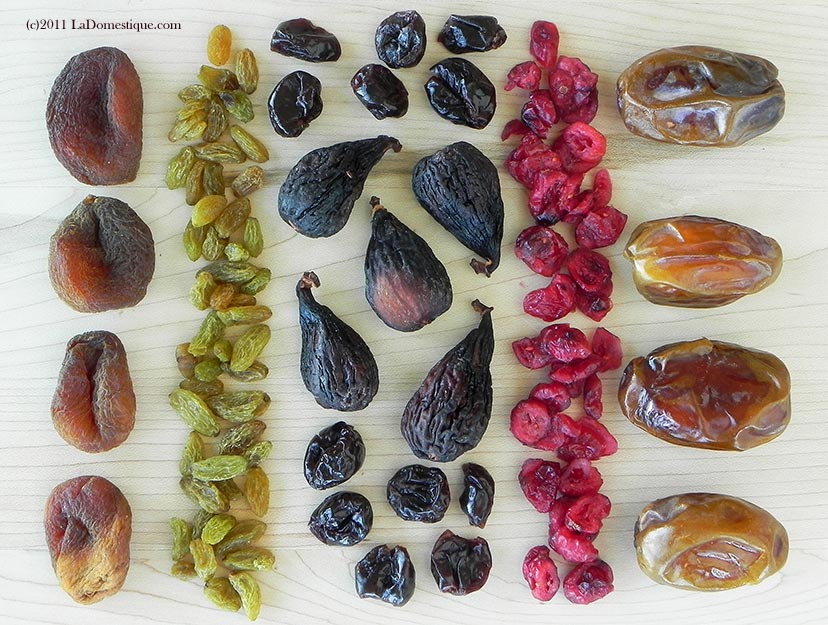
I’ve got creative ways for cooking with dried fruit in winter:
1. Chutney
In The Whole Beast: Nose to Tail Eating, Fergus Henderson writes, “There is nothing finer, after having a good stock up your sleeve, than having a reserve of chutney.” Chutney is an Indian condiment that the British have embraced. It’s basically dried fruit stewed in spices with vinegar and sugar. I found a recipe for Onion-Raisin Chutney in the bible on home curing, Charcuterie. Diced onions, dark raisins, cider vinegar, brown sugar, ground tumeric, cinnamon stick, bay leaf, and ground allspice are simmered for about 20 minutes, until the juices are thick and syrupy. The authors suggest serving the chutney with terrines made from pork, veal, or chicken. This Apple-Cranberry Chutney and this Pear and Currant Chutney over at Saveur are both very festive, making for great holiday gifts.
2. Dried Fig Purée
Figs are an interesting dried fruit, as their many seeds add crunchy texture to their soft, shriveled flesh. Re-hydrate figs in boiling water and pulverize them in a food processor (or with a handheld immersion blender) and you’ve got a thick, sweet, deeply flavored purée to use in all sorts of ways. Fig purée is well-suited to the cheese plate, where it can be spread on bread or crackers with goat cheese or served as a sauce for a soft and oozing brie. During the holiday season, I look forward to baking Martha Stewart’s Fig-Walnut Bread with puréed figs, chopped walnuts, and Christmas spices.
3. Orange Salad with Dates
Just as the title, A Platter of Figs, conveys David Tanis’ approach to gathering at the table, his recipe for Orange Salad with Dates is uncomplicated, seasonal, and pleasing to the eye. The flavors are carefully chosen for a light but satisfying end to a Moroccan supper menu. Navel oranges are peeled, sliced into discs, and arranged on a platter with a sprinkling of sugar, cinnamon, and pomegranate seeds. He serves the juicy citrus with a bowl of dried dates, recommending Medjool, Deglet Noor, Zahidi, or a mix. It’s a sophisticated and simple dessert.
4. Raisins and Sautéed Vegetables
I can always rely on Italian cookbooks for inspiring flavor combinations. Italians, more than anyone else, really seem to love their vegetables. In Urban Italian, Andrew Carmellini shares a recipe for Fennel with Orange and Sambuca that’s full of intense wintry flavors. He sautées sliced onion, fennel, garlic, fennel seed, and red pepper flakes, deglazing the pan with Sambuca. This anise-flavored liqueur intensifies the licorice notes in fennel. Golden raisins are re-hydrated in hot water and then added to the mix with orange juice and chicken broth. The braised fennel is garnished with orange zest and crunchy breadcrumbs. For a Spanish twist, José Andrés’ book, Tapas, includes a recipe for Spinach, Catalan-Style that pairs sauteed spinach and apples with pine nuts and raisins. It takes only seconds to throw together and the reward is a fantastic balance of interesting flavors.
5. Dried Fruit to Garnish Soup
Padma Lakshmi’s Tangy Tart Hot & Sweet is an endless source of ideas for me. Padma is a jet setter, and her cooking reflects cuisines from all over the globe. I love the casual, easy-going tone she sets for gathering at the table. The flavors are always lively and interesting with a liberal use of world spices. It was in this book I found the idea to use dried fruit as a garnish for soup. It’s important to balance the flavors, and Padma does so by showering sweet and sticky prunes over a coarsely puréed curried orange lentil soup.
6. Lamb Shanks Studded with Raisins
I’m familiar with roast lamb shanks studded all over with garlic and rosemary, but have never thought of studding the lamb with raisins too. This idea comes from a recipe for Lamb Shanks Eben’s Way in The Whole Beast: Nose to Tail Eating. Lamb is marinated in red wine, juniper berries, whole allspice, peppercorns, bay and vinegar for two days, then cooked in the oven for several hours until falling off the bone. The raisins are plump and full of meaty juices and red wine.
7. Dried Fruit in Cookies
We’ve all had oatmeal raisin cookies, and while they are always comforting and nostalgic, sometimes it’s nice to change things up a bit. I love the Baked books for their fantastic design and their penchant for reviving the classics with a twist. The first book, Baked: New Frontiers in Baking, contains a recipe for Black Forest Chocolate Cookies that Matt Lewis and Renato Poliafito describe as, “a very rich chocolate cookie tempered with a smattering of dried cherries and white chocolate chips.” It’s festive and modern with a respectful nod to the classic German dessert, Black Forest Cake. The authors suggest serving these cookies warm, with a soft, gooey center. Martha Stewart’s Cranberry-Pistachio Biscotti is a colorful Italian cookie that’s also great for the holidays.
8. Mixed Dried Fruit and Boiled Cauliflower
In French Food at Home, Laura Calder calls her recipe for Fruit and Nuts Cauliflower “unlikely but festive.” It seems to have everything but the kitchen sink: dried apricots cut into matchsticks, diced sweet dates, sticky prunes, golden raisins, and mixed nuts are sautéed in butter then poured over boiled cauliflower. She serves the dish as an accompaniment to celebratory holiday ham.
9. Tart Cherry Mustard
The chapter cleverly titled, “Sauces and Condiments: Not Optional” in Charcuterie, contains a bright and zesty recipe for a homemade mustard that pairs beautifully with pork and sausages. In a double boiler, carefully heat dry mustard, egg yolks, cranberry juice, vinegar, Worcestershire sauce, brown sugar, and a pinch of cayenne until thick and smooth. Toss in finely chopped dried tart red cherries and you’ve got a delicious condiment to serve over the holidays.
10. Dried Fruit in Bread
Several recipes in the Brown Dough Chapter (mix of whole wheat and white bread flour) of Richard Bertinet’s book, Dough, incorporate fruit. I’m a huge fan of dried fruit in savory breads, it adds texture and surprisingly, moisture. Three of the breads caught my eye. First, the Apricot and Oat Bread has dried apricots in the dough and a beautiful coating of oats on the crust. The author enjoys this bread for breakfast or a grilled cheese (I’m thinking of Gruyére). Second, his Cardamom and Prune Bread involves soaking the prunes overnight in rum, resulting in a Christmasy loaf with a “warm and earthy flavor.” Third, Raisin, Hazelnut & Shallot Bread has the savory taste of caramelized onions and texture of crushed hazelnuts. Richard Bertinet prepares this one toasted with cheese, chutney, ham, and good mustard. I can’t wait to try them all!
I’m new to your blog and wanted to let you know how much I enjoyed it. Not only the posts but your beautiful photos as well.
Karen,
I really appreciate you taking the time to comment. Thank you for the kind words.
I’m making a million pounds of stuffing right now, and stuffing isn’t stuffing unless it has dried cranberries or apricots or prunes. At home, I love dried cherries in my oatmeal. Yum. The “Tart Cherry Mustard” has caught my eye – sounds quite lovely!
Renee,
I love dried fruit in stuffing too. If you try the Tart Cherry Mustard, let me know how it is!
I usually add dried fruit to breads, cooked cereals and grains, puddings, sauteed vegetables (kale in particular), & chutneys. I can’t wait to try the tart cherry mustard, Tanis’ orange salad with dates, and Martha’s fig-walnut bread! All great for the holidays and thinking the mustard and bread will make good gifts!
Nikki,
Thanks for stopping by! Tomorrow I’m posting the fig-walnut bread- it’s my fav holiday quickbread and makes a great gift.
I’m liking the “rehydrating” of the dried fruit, then processing into preserves. Great idea. That stuff is so expensive and this is going to taste way better at my next cocktail party. Thanks for sharing!
DeskSnacker,
Ridiculous how easy and simple it is to make fig puree, isn’t it? I’ve been dreaming up all sorts of ways to use it because it’s so delicious.