
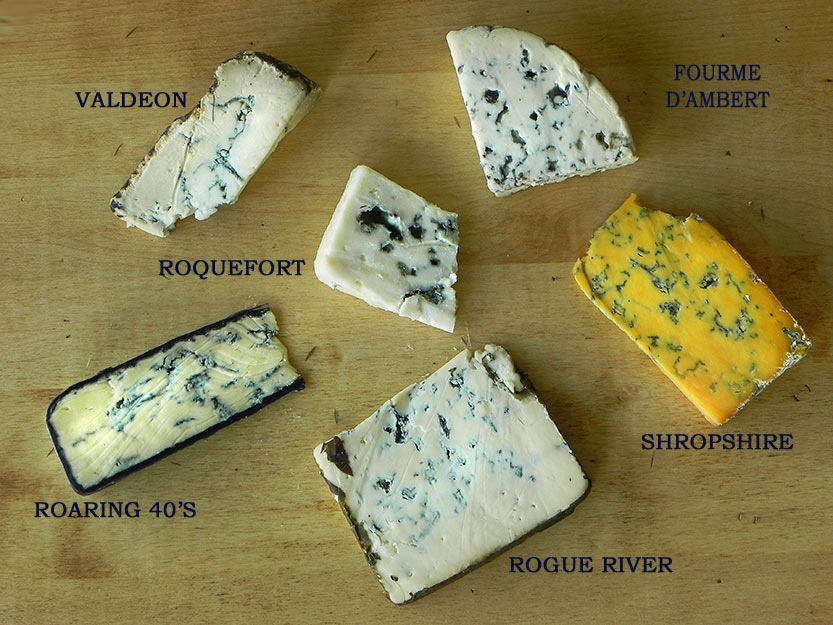
Blue Cheese StoryBoard (c)2011 LaDomestique.com
Making Blue Cheese
Blue-veined cheeses are a family that shares the characteristic appearance of blue mold bursting through creamy white or orange flesh. Cheesemakers innoculate cow, sheep, or goat cheese with a strain of bacteria spores (such as Penicillium gorgonzola or Penicillium roqueforti, among others). These spores give rise to an edible blue mold that contributes complexity of flavor to the cheese. The Cheese Lover’s Companion describes the process and I was interested to read that the blue-mold strain is added to the milk or curds, which are scooped into cylindrical molds and allowed to drain naturally, with out pressing. Once the cheese has set it is removed from the mold, rubbed with salt and sent to an aging environment (cave or cellar). The most fascinating part is that the cheese’s interior will not turn blue in color until exposed to air. Cheesemakers use metal skewers to pierce the cheese and allow the bacteria to feed on air, producing the blue veins.
Buying & Serving Blue Cheese
Cheese should be cut fresh to order and the cheesemonger should offer to let you taste it. It’s so important to taste blue cheeses before buying, as I’ve found some to be very salty. Cheese should be served at room temperature so the aroma, texture, and flavor can truly be sensed and appreciated. Pull cheese from the fridge at least an hour before serving it.
Storing Blue Cheese
According to the book Cheese, A Connoisseur’s Guide to the World’s Best, by Max McCalman & David Gibbons, cheese picked up from the store should not be stored, but enjoyed as soon as possible. A good cheesemonger seeks to sell each cheese at its peak of ripeness. Due to harsh conditions of our refrigerators and changes in temperature and humidity, a cheese will most likely begin to deteriorate once you get it home. Think of cheese as a living thing (which it is). Cheese needs to breathe in an area with good air circulation and moderate cool temps. The best wrapping for cheese is the two-ply paper where one side is wax and the other parchment. Reading Cheese, A Connoisseur’s Guide to the World’s Best, I learned about special requirements for storing blue cheeses. First, keep them at cooler temperatures than other types of cheese (below 42 degrees Fahrenheit) to prevent excessive molding. Second, once a blue cheese is exposed to air, it starts to turn more blue and this process cannot be reversed. For this reason, it’s best to cover a package of blue cheese in extra plastic wrap to keep it fresh longer and prevent drying out.
Cooking with Blue Cheese
When cooking with blue cheese, either let it be the star of the dish, or think of how to balance its pungent flavor off other complimentary flavors. Blue cheese plays a starring role in soufflés, pastry (like the blue cheese crackers from yesterday’s post), and cheesy potato soups. Dolled out with a judicious hand, blue cheese provides contrast to sweet root vegetables in gratins and bitter greens in salads. It gets along well in a group as a pizza or focaccia topping. Or, let it contribute to a formal cheese platter with other players like Parmesan, Cheddar, and aged goat cheeses. Think about balancing the aggressiveness of blue cheese with sweet, spicy, creamy, or tart flavors.
Blue Cheeses
Here are a few examples of blue cheeses from around the world:
-
Valdeón Blue
One of Wine Spectator’s 100 Great Cheeses made in Spain. It’s a combination of cow and goat milk and they describe it as having a “sharp saltiness backed by a buttermilk tanginess.” Valdeón has a creamy texture. They are wrapped in chestnut leaves, which make for a striking visual on the cheese plate.
-
Raw Fourme d Ambert
A French cow’s milk blue from Auvergne that is hundreds of years old. I found this cheese listed on Wine Spectator’s 100 Great Cheeses. They describe it as rich and creamy, not crumbly.
-
Long Clawson Shropshire Blue
Also on the Wine Spectator 100 Great Cheeses list, this English cow’s milk cheese is made like a Stilton but aged for less time (3 months). This means it’s milder and less complex. The cheese is sweet and sharp. The yellow color is from annatto, a natural dye derived from the seeds of tropical achiote trees. According to The Cheese Lover’s Companion, annatto is flavorless.
-
Rogue River Blue
Another of Wine Spectator’s 100 Great Cheeses, this American made cheese is another cow’s milk blue. It’s a seasonal cheese, made only from autumn milk. The cheese is sold wrapped in grape leaves that have been soaked in Oregon pear brandy. Wine Spectator describes the cheese as robust and rustic without the saltiness of other blues.
-
King Island Roaring Forties Blue
This cow’s milk cheese is made on King Island, off the Tasmanian coast, part of Australia. It’s a creamy Roquefort-style blue with an assertive flavor. I found it described in the book, Cheese, A Connoisseur’s Guide to the World’s Best, as having sweet and nutty flavors. The cheese is covered in blue wax.
-
Joan of Arc Roquefort
A soft and creamy blue, Joan of Arc Roquefort is a French sheep’s milk cheese. The flavor is buttery and a bit salty balanced by a nice tang that grows more intense as it ripens. Roquefort has a history that dates back to the times of Ceasar. According to the Cheese Lover’s Companion, “the key to Roquefort’s success is the mold, Penicillium roqueforti, found inside these natural limestone caves (in France).”
Wine Pairing
This quote from Wine Spectator describes the relationship of wine to blue cheese quite well, “Some cheeses deliver so powerful a punch that they require a wine that can push back effectively.” The sweet caramel flavors in a glass of fortified Port wine create harmony with bracing pungency of blue cheese. Also, the character and full body of aged wines like Port or Sauternes are a nice match for the heavy, creamy texture of blue cheeses. Speaking of sweet Sauternes, think of how the flavors of honey tame the bitterness of cheeses and you’ll see why this golden wine, sweet and deeply nuanced, is also a fitting partner to blue cheese.
Flavor Pairing
-Vegetables: tomatoes, squash like pumpkins, butternut, or acorn; celery, root vegetables like carrots, parsnips, turnip and rutabaga; broccoli and cauliflower, radish, caramelized onions.
-Deeply concentrated dark dried fruits like cherries, raisins, and prunes
-Bitter greens like endive, escarole, chicory
-Other greens like spicy arugula or dark spinach
-Nuts: hazelnuts, walnuts, pecans
-Spices: cayenne, paprika, smoked paprika, nutmeg
-Grilled meat or steaks such as beef, lamb, or veal
-Fall fruits like pears, apples, and pomegranite
-Mushrooms
-Honey
-Green olives
-Bacon