
This quote from The Produce Bible describes the potato perfectly:
“Dependable and adaptable, with the ability to move between dressed-up glamour and simple, satisfying understatement…”
Potatoes are comforting, with their earthy, rich flavor and hearty texture. They are affordable, filling nourishment. The potato is a versatile vegetable that can feed us in endless meal renditions. Rather than mindlessly enjoying the occasional baked or boiled potato, I encourage you to try the different varieties at the farmers market and experiment with new preparations. Maybe this week you’ll try something new? Often times we are intimidated by a new technique, only to find that it’s so easy, we’re kicking ourselves for waiting so long. Even the fanciest potato galette or the precarious Spanish tortilla is surprisingly do-able.
Growing
Potatoes are a member of the nightshade family. They are grown all over the United States, and most varieties came from South America. The potato forms on a vine that grows underground and prefers the cool temperatures of fall and spring. Potatoes are available year-round, but I find they are at their best in summer and fall. During winter and spring the only available potatoes are those that have been stored through winter, and they all seem to be unpleasantly hard and often bruised.
Picking & Storing
I learned from the Deluxe Food Lover’s Companion that potatoes turn green when exposed to light for a long period, and this is caused by the alkaloid solanine, which can be toxic if eaten in quantity. For this reason, always store potatoes in a cool, dry, dark place with good air flow. Potatoes kept this way will last about 2 weeks. Do not store potatoes in the fridge or in a plastic bag. The new potatoes of summer and fall should be used within a couple of days, as they will not last. Store potatoes away from garlic and onions, which produce chemicals that can expedite sprouting.
Cooking with Potatoes
To cook with potatoes, wash the skin and scrub it clean of dirt, then peel if you want to. Any sprouts should be cut away and discarded. Do not cook with potatoes that are green, soft, wrinkled, or bruised. If you are prepping potatoes ahead of time to cook later, place peeled or cut ones into a bowl of water to prevent discoloration. Prepare potatoes by boiling, baking, roasting, or frying.
Varieties
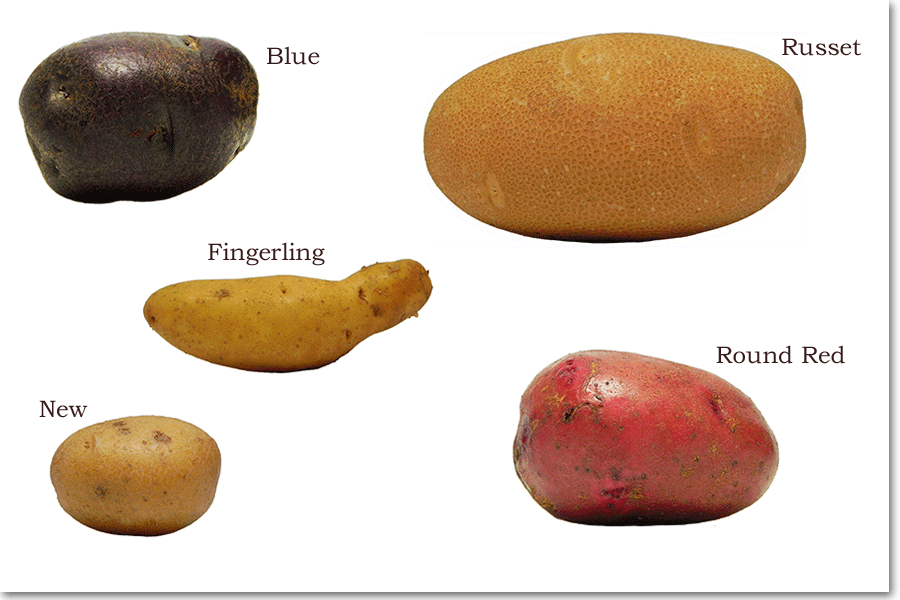
New Potatoes
This term describes any young potato that is picked before converting its sugar completely into starch. The texture of a new potato is waxy and the skin is thin and paper-like. They keep their shape better than other potatoes when cooked, and have a fresh, sweet flavor. Keep it simple when cooking new potatoes. Simply boil or steam them and let their flavor shine.
Blue Fleshed
Blue or purple potatoes are an ancient variety that has recently come back into vogue in farmers markets. They are dense in texture with deeply pigmented skin and white or beige flesh with blue streaks. These potatoes are good for boiling and serving as a mash.
Fingerlings
These are a long, white fleshed potato whose skin can be tan, red, or blue. Fingerling potatoes are flavorful with a lovely soft texture when cooked. Use them for steaming , boiling, or roasting.
Round White Potatoes and Round Red Potatoes
Pretty much identical in flavor, the only difference between these two potatoes is the color of their skin. Often called a boiling potatoes, the round potatoes are better suited to mashing, roasting, and frying than baking. According to the Deluxe Food Lover’s Companion, these potatoes have a waxy flesh with less starch and more moisture than a russet.
Russet
Also called old potatoes, baking potatoes, and Idaho potatoes; they have a rough, brown skin and dry texture. Loaded with starch, russets are the perfect baked potato. They can also be used for smooth and silky mashed potatoes or crisp french fries.
Yukon Gold
These potatoes have buttery-colored skin and flesh. Yukon gold potatoes are a moist, creamy boiling potato that make for a fantastic rustic mashed potato.
Flavor Pairing
Herbs: thyme, rosemary, chives, sage, parsley, basil
Garlic, onion, shallot
Greens: arugula, spinach, kale, chard, etc.
Butter, crème fraîche, cream, sour cream,
Spices: nutmeg, paprika, chili, mustard,
Cheese: Parmesan, Gruyère,
Mayonnaise, aoili
Eggs: fried or scrambled, like an omelette
Oil, lard, bacon, duck fat
Roast chicken, beef, and lamb
Cured fish like cod, salmon, or trout
Chorizo, ham, pancetta,
Truffles
Sea salt
Do you have a favorite potato or tip for cooking potatoes? Let me know in the comments section.
Click here.