
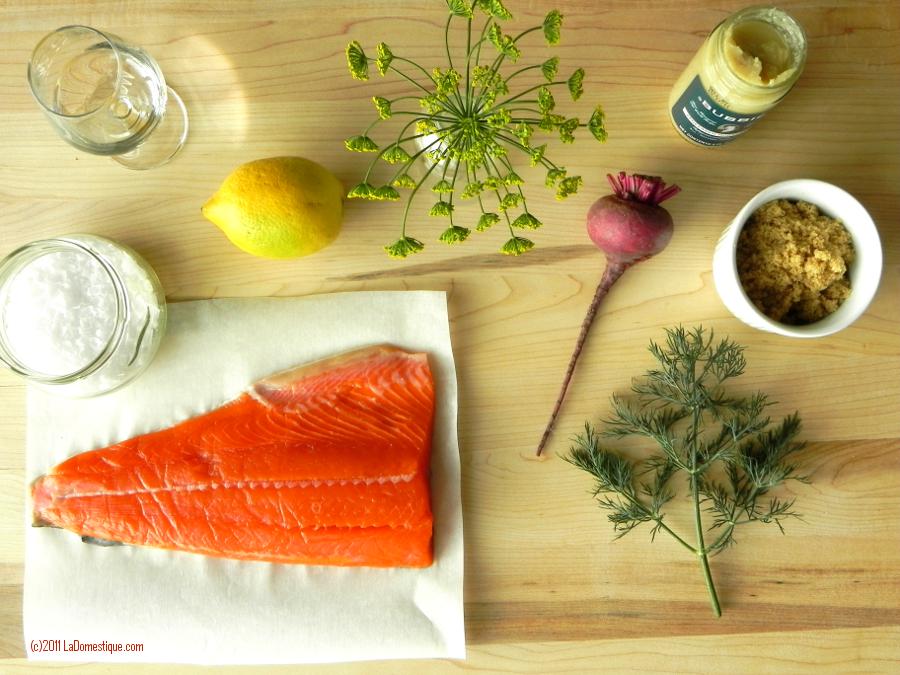
Ingredients For Cured Salmon (c)2011 LaDomestique.com
Happy Friday! Today’s post is inspired by Jamie’s Food Escapes, on the Cooking Channel. During his trip to Stockholm, Sweden, Jamie made his version of gravlax. The Swedish love their cured fish, especially gravlax, which is raw salmon cured in sugar, salt, and other flavorings. In her book, Handmade Living, Swedish born Lotta Jansdotter shares a recipe for Gravad Lax that she learned from her father. Gravlax is sliced paper thin and often served as part of a Swedish smorgasbord, which means “bread and butter table” or a festive buffet.
As I pondered over how to end beet week, I thought of how Jamie Oliver used grated raw beets as part of his salmon cure. The beets dye the salmon garnet red and contribute a sweet, earthy flavor. It’s really beautiful sliced because you see layers of color in the salmon ranging from deep red to bright orange. We’re also cooking in the moment as wild Alaskan salmon is currently in season and there’s some gorgeous product at the fish market.
When it comes to salt-curing salmon for gravlax the recipe is just a general guideline. You can cure as large or small a piece of fish as your budget allows. I watched Jamie cure a whole side of salmon on TV, but I ended up getting about 3/4 pound. No biggie.
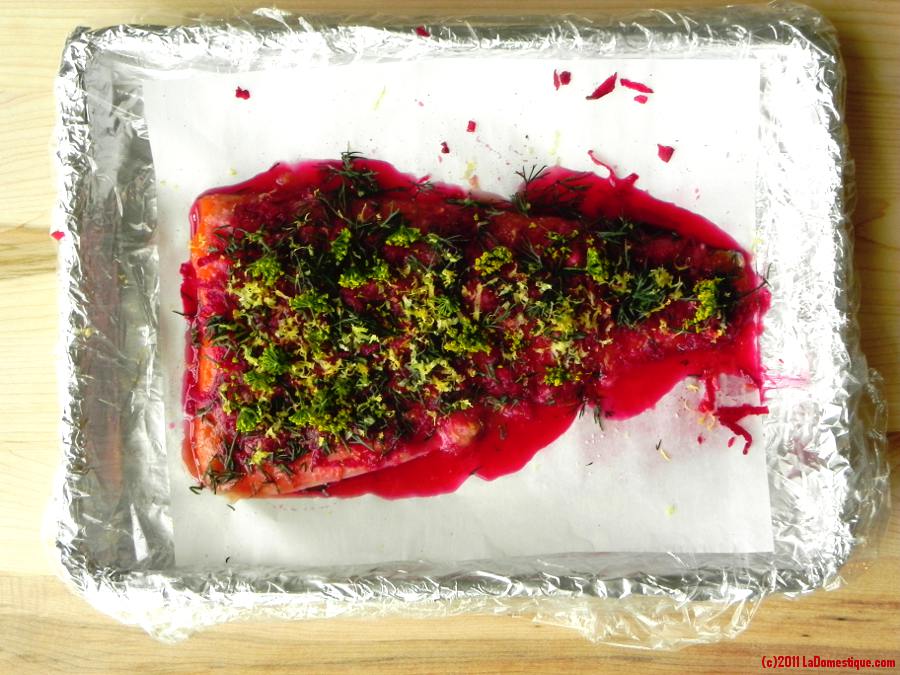
Salmon Cured With Beets (c)2011 LaDomestique.com
Gravlax from Jamie’s Food Escapes
I have been unable to locate a published version of this recipe, so this is based off his demonstration on the show.
Place 1 fresh side of salmon (tail end), skin on, bones removed in a nonreactive container. Keep in mind that as the salmon cures it will leak water so make sure the container has sides that will hold the liquid in. Cover with a layer of rock salt (8 tablespoons) and then 3 tablespoons brown sugar. Grate over some fresh horseradish (I couldn’t find fresh so I used prepared). Then grate 1 uncooked, peeled beetroot atop the salmon. Pour two shots Schnapps over the salmon. Pat the salmon down (pretend you are airport security). Sprinkle chopped dill and dill flowers (which I had in my garden!) on the salmon. Grate the zest of a lemon atop the salmon. Wrap the salmon tightly in plastic and put a weight on top. You want to compress the salmon as it cures in the refrigerator. It should take 48 hours for the salmon to cure. At that time remove the salmon from the fridge, wipe off the cure, cut off the skin, slice thinly and serve with lemons, brown bread and butter. Jamie says the cured salmon will keep for a couple of weeks in the fridge, tightly wrapped.
Since I did not use a whole side of salmon, I just liberally covered the salmon in the above ingredients without much concern for quantity. Once the salmon is cured I promise to share my results.
Thanks for reading and have a wonderful holiday weekend!
Update: Home-Cured Salmon Results
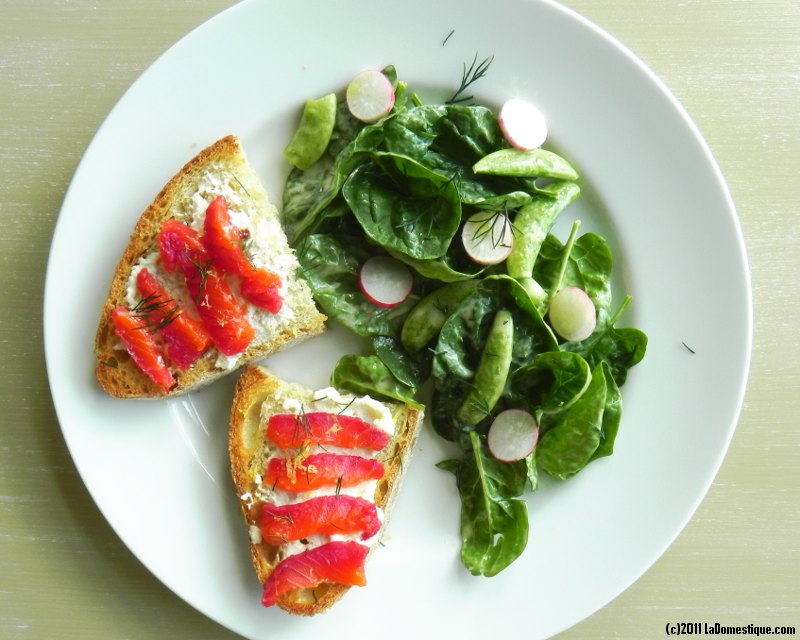
I ended up curing my salmon for about 2 1/2 days, just because that’s the way it all worked out. When I pulled the weights off and rinsed the cure off the fish, the aroma was sweet and herbaceous. The grated beets dyed the salmon a gorgeous garnet red and as I cut into the flesh it transitioned to a sunset pink. So pretty! The fish tasted of dill with a hint of the earthy sweetness from the beets. It was delicate in texture and not at all salty. I’m really pleased with how my home-cured salmon turned out and will definitely make it again. The only difficulty was cutting the skin away from the meat. A sharper knife and more patience may have helped. To make slicing easier, I popped the fish in the freezer for a few minutes. I served the salmon slice thin on toast with ricotta, dill, lemon zest, and a drizzle of olive oil simply because that’s what I had on hand. A salad from my garden was the perfect accompaniment: snap peas, spinach, radishes, herbs, with a creme fraiche-lemon-olive oil dressing. Happy days!
The colours of the salmon are so vibrant! Sounds delish.
Thanks for reading, Kyleen! It was fun to make cured salmon at home, especially during wild salmon season.