
Salad Greens
The ingredient of the week at La Domestique is salad greens with a focus on lettuces, arugula, and spinach. Each variety is unique with its own flavor and requirements for care and storage. Salad greens are rich in calcium, iron, and vitamin A and C. The darker the green, the more nutrients it has. The best place to get salad greens is your own garden or the local farmer’s market. I always find prepackaged salad greens in the grocery store to be disappointing- flavorless, wilted, and sometimes even slimy. If you must purchase greens at the supermarket, select them from a bulk bin and look for suppliers as close to your home as possible. Get to know what day your grocer receives produce deliveries and shop on that day.
Types of Salad Greens
Lettuces
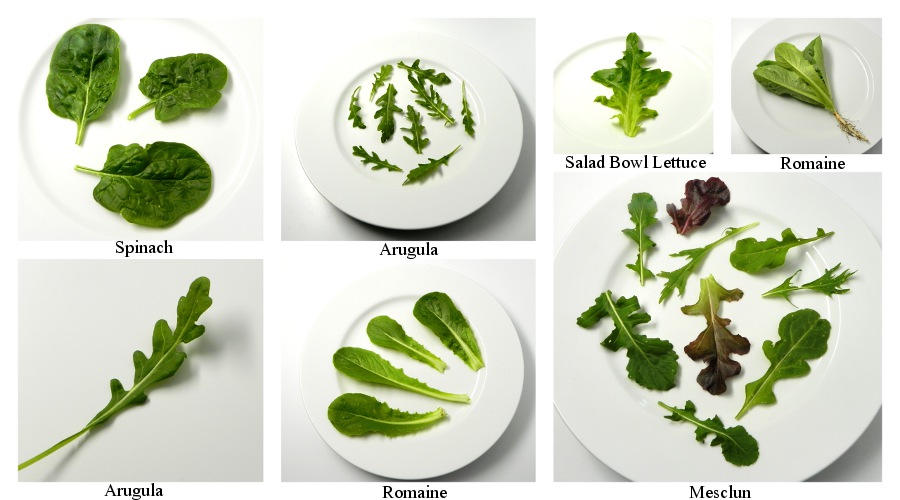
According to the Deluxe Food Lover’s Companion there are four general categories for lettuce: Butterhead, Crisphead, Leaf, and Romaine. Head lettuces are harvested whole, while leaf lettuces grow in a loose bunch. Leaf lettuces are harvested by cutting off the leaves, which will grow back and can be harvested again. Leaf lettuces have a more crisp texture and interesting flavor than head lettuces. However, leaf lettuces are more delicate and perishable. Leaf lettuces include oak leaf, salad bowl, red leaf, and green leaf. In Chez Panisse Vegetables Alice Waters writes that “mesclun” is a French word meaning “mixed” and it is traditionally a collection of foraged wild greens. These days it is usually a cultivated mix of dandelion greens, lettuces, peppery arugula, and chervil.
Generally, it’s best not to soak leaf lettuces because they bruise and wilt easily. Instead, place leaf lettuces in a colander and rinse them with water. Dry them gently by rolling them up in a towel and then refrigerate in a plastic bag for about three days.
Head lettuce can be refrigerated in a plastic bag for three or four days. Wash them just before using. Romaine is a crisp and somewhat bitter flavored head lettuce with long green leaves. Butterhead (Boston or Bibb) lettuce is a small bundle of soft green leaves with a slightly sweet flavor. Crisphead lettuces, also known as Iceberg, are round tightly packed, and pale green in color.
Arugula
Also known as rocket, this peppery green comes in cultivated and wild varieties. Arugula is a member of the mustard family. According to The Produce Bible, cultivated arugula has broad leaves and wild arugula has thin, serrated leaves. The smaller the leaves, the milder the flavor. Arugula can be washed and spun dry in a salad spinner, then refrigerated in a partially closed plastic bag for a couple of days.
Spinach
Spinach is a dark, leafy green that originally came from the Middle East. The flavor of spinach is sweet and slightly bitter. The leaves can be either crinkled and curly or smooth. Wash spinach by soaking it in a couple of changes of water and dry in a salad spinner. Refrigerate in a plastic bag with a paper towel for three or four days.
Making a Salad
A well made salad is all about balance. Think about balancing flavor: sweetness, nuttiness, spice, earthiness, acidity, bitterness. Include a variety of textures for interest: crunchy, creamy, soft, and crisp. Consider the influence of color. Do you want a monochromatic salad or a variety of bright colors? Don’t forget aroma. The scent of herbs like mint, chive, dill and basil stimulates your senses before you even take a bite. Choose a dressing that compliments your salad, rather than overpowering the flavor of the vegetables. A delicate green leafy salad needs only a drizzle of olive oil and a squeeze of lemon. An earthy salad with beets and spicy greens can handle a creamy mustard or blue cheese dressing. Remember to try new things occasionally. If all you ever dress a salad with is a plain vinaigrette, why not branch out and try an Asian inspired ginger-soy dressing?
Making Your Own Vinaigrette
You can totally make your own salad dressing. It’s quick and simple and tastes a thousand times better than any bottle you pick up at the supermarket. A vinaigrette is made up of oil, an acid such as vinegar or citrus juice, and salt and pepper. Since vinaigrette is made with very few ingredients, it’s important to use high-quality, tasty oils and vinegars. Start with a simple ratio of three parts oil to 1 part vinegar and taste to adjust. You can emulsify the vinaigrette by whisking the oil and vinegar together or shaking the ingredients up in a jar. Always make vinaigrette just before you plan on using it. Over time the emulsified dressing will separate.Experiment with different oils like sesame oil or nut oils (walnut, pistachio) and vinegars such as balsamic or sherry vinegar. You can also incorporate shallots or freshly grated ginger into your vinaigrette.
Growing Greens
Salad greens are mostly cool season crops for spring and autumn. The heat of summer causes them to bolt, or go to seed. Peppery greens like arugula can take on an unpleasantly spicy flavor in hot summer weather. Salad greens grow quickly from seed in as little as about 6 weeks. Arugula can be cut as soon as three weeks after sowing and can be successfully grown in containers. Spinach is a cool weather crop that quickly goes to seed once summer days get hot. It prefers a bit of shade with moist soil and can also be grown in a container. I’ve found growing salad greens to be a huge confidence booster and a real joy. It’s amazing how quickly they burst through the soil and before you know it you’ve got more than you can eat. Whether your garden is a generous backyard plot or a container garden on an apartment balcony, you can enjoy eating your own greens. I guarantee they will taste better than any you could buy from the supermarket. Maybe it’s time to try something new?
Your blog is a joy !
Thank you Catherine, that means so much. I just visited your site and it’s lovely- can’t wait to explore it some more.
I have always been a ranch person. But this has inspired me to break loose a bit and try to make our own vinaigrette. Dwain really likes them but I tend to steer clear since I don’t like sweet dressings. I never knew they were so easy to make. It is probably more economical too. We have many bottles of vinaigrette in the fridge that have not been finished because Dwain gets tired of them. This would allow us to make the dressing for the salad we eat and not waste. Great blog!
thanks, sis! 🙂 I’m a big fan of throwing everything in a jar, shaking it up, and then taste to adjust if needed. Have fun!