
The Whole Bird
I believe in the value of the whole bird. It’s cheaper to purchase a whole chicken and break it down, making use of the legs, breast meat, thighs, wings, and eventually the bones for stock. Each part of the bird is delicious in it’s own way. Chicken thighs are great for braising, wings are crispy and lip-smacking good roasted, bone in chicken breast is moist and succulent when poached, and glazed drumsticks are great for gnawing on. When buying chicken, I try to purchase from local farms or small scale farmers and I avoid poultry from intensive farming. It’s important to make an informed decision when you spend your money at the grocery store. You can do this not only by reading the fine print and asking questions about your poultry products, but also by allowing taste to be your guide. Each week, try a bird from a different producer. Was one more succulent and meaty than the other? Blind acceptance is how intensive farming tactics and inferior products survive in our supermarkets.
Types of Chicken
What’s the difference between a broiler-fryer and a roaster? According to the Deluxe Food Lover’s Companion, a broiler-fryer weighs around 3 1/2 pounds and is about 2 1/2 months old. A roaster has more fat and therefore more flavor, which benefits from roasting and rotisserie cooking. Roasters are between 2 1/2 and 5 pounds and up to 8 months old. In my local butcher shop recently I noticed stewing chickens, which weigh between 3 to 6 pounds and can live to the ripe old age of 18 months. These older chickens have a tougher, even more flavorful meat that is made tender and delicious in stews and braises. Lastly, a capon is a rooster that is fed a fattening diet and slaughtered by 10 months of age. Capon needs to be slow roasted and is the traditional bird for coq au vin.
Resources
Need to learn the basics of breaking down a bird? Want to understand where chicken comes from and ethics involved in raising poultry? Just looking for inspiration? Here the most useful books on the subject(in my opinion) :
The River Cottage Meat Book by Hugh Fearnley-Whittingstall
Martha Stewart’s Cooking School
How to Cook Everything by Mark Bittman
A Bird in the Oven and then some by Mindy Fox
Spring Ingredients & Chicken
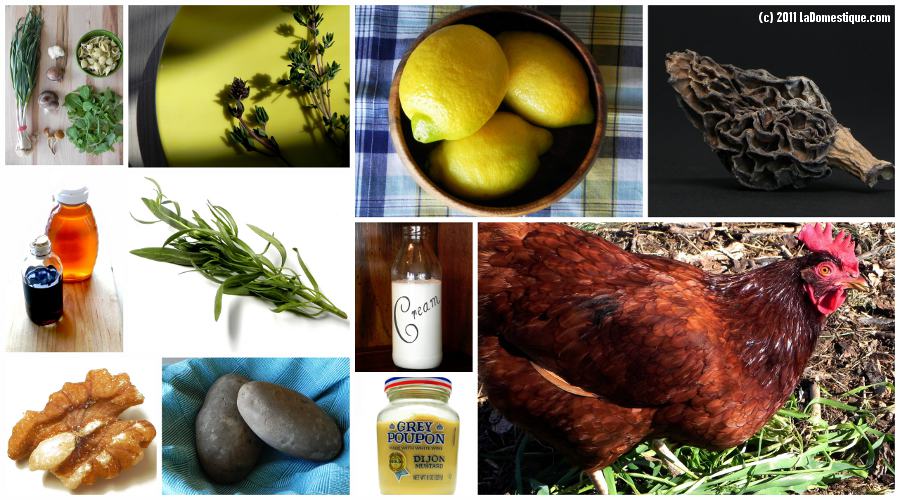
As spring arrives with sunshine and fresh produce, we seek not only lighter meals but healthy sustenance for days spent hiking and gardening outside. Chicken is a natural partner to the spring pantry. Simplicity is chicken’s strong suit and the subtle flavors of spring produce need no embellishment. In the spirit of intuitive cooking, a list of ingredients that pair beautifully with poultry:
- roast garlic, cream, and thyme
- white wine, lemon, parsley, dill, capers and orzo pasta
- spring greens: spinach, arugula, watercress, salad greens
- walnuts, red wine vinegar, and campanelle pasta ( sounds crazy but it’s crazy good!)
- crème fraîche, dill, peas, bacon
- buttermilk
- Dijon mustard and tarragon
- honey and Herbs de Provence
- yogurt, mint, cumin, coriander
- leeks and butter
- mushrooms, especially spring morels
- roasted chicken over croutons
- with crispy roast potato
What would you add to the list for Spring flavor pairings?
Leave Your Suggestions In The Comments Section (Button At The Top Of This Article)
I love this! What a clever, engaging approach to a roast chicken. This reminds me of a funny Julia Child video in which she goofily describes different types of chickens.
Thanks, Kimberly. When I wrote this post I could see Julia Child slapping a raw bird onto the counter top and flailing it’s wings. 🙂