
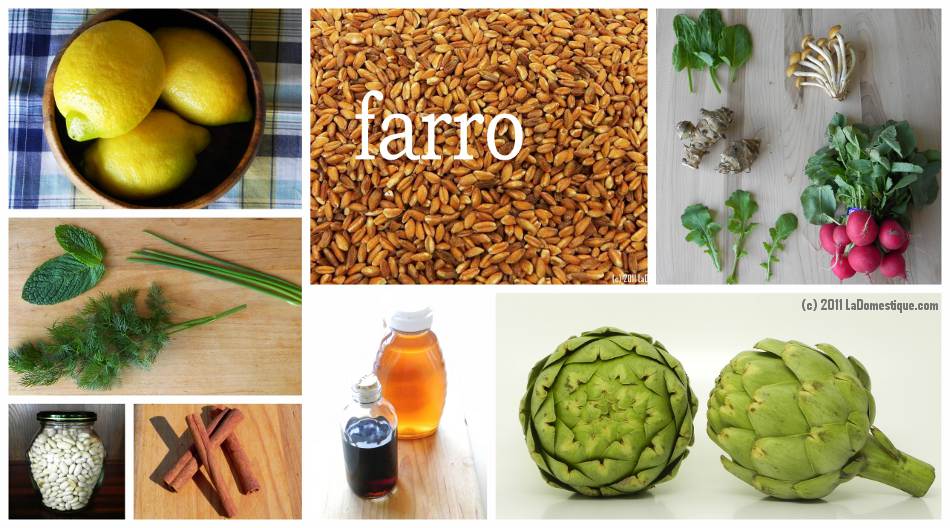
Farro In Your Pantry Storyboard
Farro
According to the Deluxe Food Lover’s Companion, farro is an ancient grain that was cultivated by the early Egyptians. These days farro, also known as emmer, is associated with Italy. It is mostly produced in Abruzzo and Tuscany, where the region of Garfagnana maintains Geographical Indication status for the farro grown there. Farro can be found in whole grain (slow cooking) or semi-pearled (quicker cooking) varieties. Most farro sold in the United States is semi-pearled and cooks in about 25 minutes. This cereal grain is low in gluten and high in fiber. In Italian cuisine farro is used for salads and soups, as well as risottos (nicknamed farrotos). Farro behaves much the same as arborio rice by absorbing the liquid it’s cooked in. Pastas are made from farro flour. Farro speziato, or cracked farro is used to achieve the porridge-like consistency of polenta. Through my research I have learned it’s really not necessary to soak farro before cooking, but give it a try if you prefer. Properly cooked farro should have a pleasing, al dente bite to it.
The Flavor of Farro
As I worked in the kitchen all week cooking farro, I fell deeper and deeper in love. No wonder it has become a trendy grain. I can imagine that experiencing farro for the first time at a fine restaurant, one might be lusting for it the next day. I’m not exaggerating, there’s something special about farro. The flavor is sweeter and more complex than wheat berries. The texture has a certain delicacy and sophistication compared to barley. Maybe the fact that this grain is 20,000 years old contributes to its deep, complex taste.
Farro in your Spring Pantry
Though farro is a hearty grain from the wheat family, it is right at home in your spring pantry. The days can be cool and rainy, and when the sun shines working in the garden can leave you famished. A warm farro salad with mushrooms and sherry vinegar pairs earthy, oaky flavors with the nutty farro. Speaking of nuts, a splash of walnut oil or a sprinkle of pine nuts works beautifully on a spring farro salad. The Italians prefer this grain with beans and mussels in a stew. A spring riff on this tradition might use white wine, fennel, lemon and bright spring herbs. Citrus gives balance to the heartiness of farro. In Italian Slow and Savory I came across a farro and artichoke soup- perfect for spring! Lidia Bastianich suggests pairing farro with arugula and ricotta in her book, Lidia Cooks From the Heart of Italy. A farroto with peas, asparagus, and braised radishes pays homage to spring’s bounty. But, farro isn’t just for savory dishes. While reading Maria Speck’s book Ancient Grains for Modern Meals I was seduced by a breakfast recipe for “Creamy Farro with Honey and Roasted Grapes”. You could do so many variations on this. Tomorrow I’m planning to use banana slices, honey, and almonds with a side of yogurt. I love Maria’s suggestion to cook the farro with a cinnamon stick and a teaspoon of anise seeds- how exotic!
I encourage you to dig into the pantry and explore pairing flavors with farro. Cook the grain in chicken or vegetable stock and thyme. Try farro with different cheeses such as a pecorino or goats milk cheese. Lavish farro in whatever fresh herbs are growing in your window box. Serve farro with a meaty lamb ragu or as a side to roast chicken. Make yourself a special breakfast incorporating farro to keep you going all day. Branch out of the usual egg pasta and make fresh pasta with farro flour. Add a little mystery to your pantry with this ancient grain. It might just inspire you to come up with a few new meals for your weekly repertoire. And make sure to share what you discover here at ladomestique.com!