
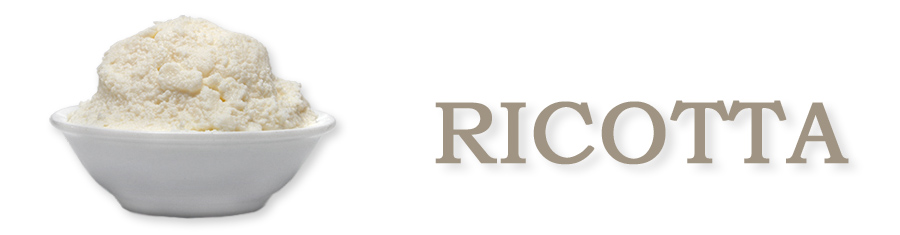
How did a byproduct of the Italian cheese making industry become a pantry staple? Ricotta, which comes from the Latin word recocta, meaning “recooked,” is made from whey, the milky liquid left behind when the curd is formed during cheese making. As The Cheese Lover’s Companion describes the process, whey is heated, allowing protein particles to rise to the surface, and the solids are skimmed off. These solids are strained and placed into a mold to drain off more liquid. In the book, Milk, Ann Mendelson writes that the best ricotta comes from sheep’s milk whey, and that cow’s milk is “the blandest and least interesting.” There is hope for those of us who don’t have access to sheep’s milk ricotta. For the most nuanced flavor, seek out full fat ricotta (cow’s milk is widely available), which is much thicker with a drier texture and a slightly sweet, nutty flavor. Avoid ricotta combined with whey (especially fat-free), with its wet, creamy texture and complete lack of flavor.
Technically, ricotta is not a cheese at all, since it’s made without the use of a starter or rennet. This “dairy product” can be found as fresh ricotta, ricotta salata, or even smoked (affumicata). Ricotta salata, meaning “salted,” is made mainly in Sicily and Sardinia, and has a character similar to feta but not as salty. Preservation was the motive behind its creation, and salting extends the shelf life of ricotta by a week or more. Next time you’re in the cheese section, look around and see what types of ricotta they carry. Maybe try something new?
Ricotta, plain and simple, is slightly granular with a rich, thick, semi-soft texture. It’s at once comforting and luxurious. During winter, ricotta adds heft to lasagna, binding the layers of pasta and sauce. It enriches cheesecakes with a texture that’s both light and dense. Ricotta is a contradiction, waste from the real cheeses…the sow’s ear turned into a silk purse. This week at la Domestique we explore the many ways to cook with ricotta, both sweet and savory. While some will try to convince you that ricotta can be made at home, in Milk Ann Mendelson argues that milk cooked with vinegar is more like cottage cheese and not at all like genuine ricotta. Seek out the best ricotta available, since cooking with ricotta usually involves simple recipes which depend on quality ingredients for stellar flavor. Tomorrow is 10 Ways Tuesday at la Domestique, and you’ll find plenty of creative ideas for cooking with ricotta during winter.
Do you have a favorite ricotta? Let me know in the comments section. Click Here.
I love ricotta salata with things that a slightly sweet- in a salad with peaches, mint and prosciutto. That’s my favourite. Can’t wait to see the ideas tomorrow.
That sounds delicious, Tori. A perfect example of the simple luxuries in life.
I love homemade ricotta. Oddly enough, some of the best I have ever had was during the first and only time I was in Boulder. It was last year at a bar I believe was called Alba near the Marriot Hotel. We had it drizzled with olive oil with a side of fried anchovy stuffed sage leaves. I still think about that ricotta! Thanks for featuring it this week. Now if I could only get up the nerve to make it…
You’ve reminded me it’s been too long since I’ve dined at Alba, thanks!